Is Phuket safe for tourists?
Phuket is manageable for most visitors who take ordinary precautions. The risks travelers are most likely to face are changing sea conditions, scooter crashes, heat, heavy drinking, theft from unattended belongings, and disputes caused by unclear prices. Follow beach flags, choose transport you can handle safely, confirm costs in advance, and keep emergency details available offline.
Your six-point Phuket safety check
These habits reduce the most common avoidable problems without making the trip feel restrictive.
Respect beach flags
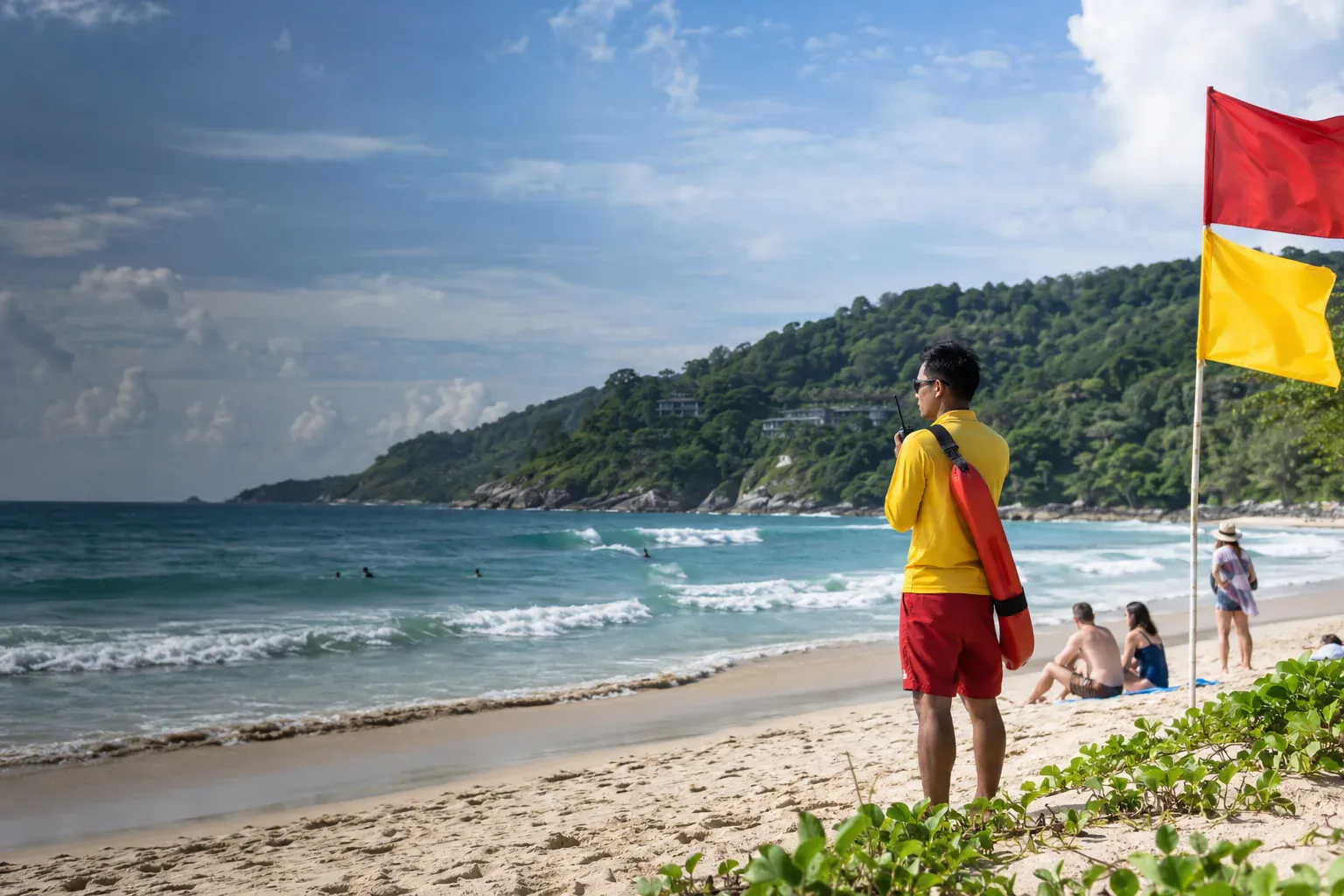
Never swim under a red flag. Ask the lifeguard when conditions or marked areas are unclear.
Do not learn on holiday
Use a scooter only with the right licence, insurance, experience, helmet, and a sober rider.
Plan for tropical heat
Carry water, use shade, and schedule demanding walks outside the hottest part of the day.
Pack health basics
Bring repellent, sun protection, medicines, insurance details, and any prescription documents.
Confirm prices first
Agree on the total price and inclusions before a taxi, rental, tour, drink, or nightlife service.
Keep help offline
Save emergency numbers, your accommodation address, insurer details, and an offline map.
Tsunami safety in Phuket
A tsunami is uncommon, but the right response is simple and time matters. If you notice a natural warning sign, move away from the coast immediately. Do not wait for a siren, phone alert, or instruction.
Know the natural warnings
Natural signs can arrive before an official warning. Treat any one of them as a reason to evacuate.
What to do if a tsunami may be coming
- 1
Protect yourself during the shaking
Drop, cover, and hold on if an earthquake makes it difficult to stand. Move once the shaking stops.
- 2
Leave the coast immediately
Go uphill or inland after strong or long shaking, unusual sea movement, or an ocean roar. Do not wait for an official order.
- 3
Follow the marked evacuation route
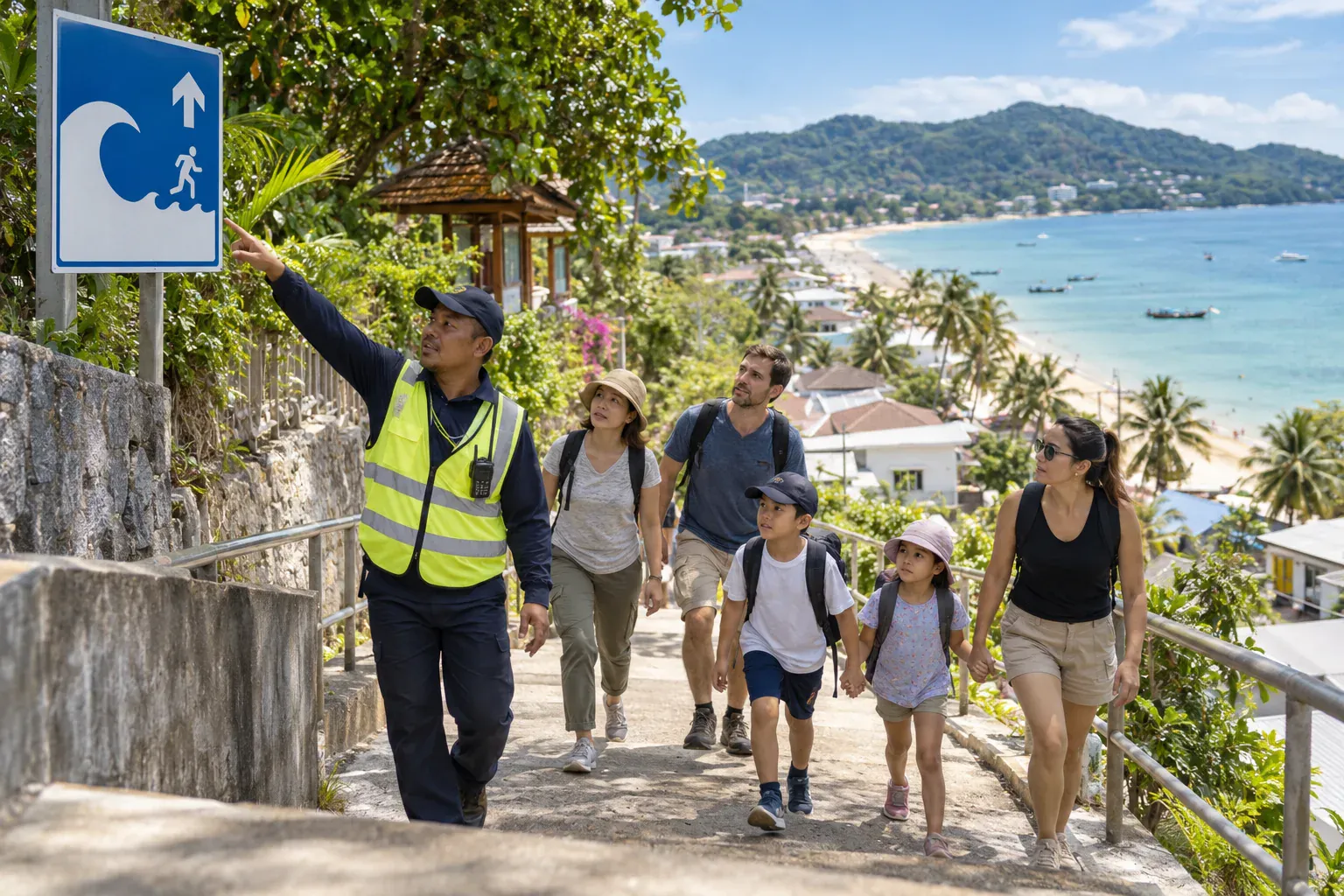
Use posted signs and local instructions. Walk if traffic is blocked. If higher ground is unreachable, use an upper floor of a sturdy reinforced-concrete building.
- 4
Stay away from water
Do not stop to watch or film. Avoid beaches, marinas, river mouths, canals, and other waterways connected to the sea.
- 5
Wait for the official all-clear
A tsunami is a series of waves and the first may not be the largest. Dangerous water movement can continue for hours.
Before you go to the beach
- Notice blue evacuation signs, uphill routes, and assembly points.
- Ask your hotel where to go from your room and nearest beach.
- Agree on a family meeting point in case phones do not work.
- Keep shoes, essential medicine, and a charged phone within reach.
Official alerts and updates
Thailand can issue emergency Cell Broadcast alerts in high-risk areas, but no alert system replaces natural warning signs. Keep emergency alerts enabled and follow local authorities.
Beach, swimming, and boat safety
Sea conditions can vary between beaches and change within the same day. A calm-looking surface is not proof that swimming is safe.
Red flag
Do not enter the water. Dangerous surf or currents are present.
Yellow flag
Use caution and ask a lifeguard where swimming is allowed.
No flag or lifeguard
Do not assume conditions are safe. Choose a patrolled swimming area.
If a rip current pulls you away
- Stay calm and do not fight the current straight toward shore.
- Float or tread water to conserve energy.
- Swim parallel to the beach until free, then angle back to shore.
- If you cannot escape, face shore, wave, and call for help.
Boats, snorkeling, and diving
- Use a reputable operator and listen to the safety briefing.
- Wear the provided life jacket when instructed, even on a short transfer.
- Tell the crew if you are not a confident swimmer.
- Do not enter rough water after drinking alcohol.
- Check the weather and cancellation policy before departure.
Choosing the right coast and season helps. Compare Phuket beaches and islands, then check the Phuket rainy season guide before planning a water day.
Road and scooter safety
A Phuket scooter is not a good place to learn to ride. Hills, sudden rain, sand near beaches, unfamiliar left-side traffic, and mixed road users leave little room for error.
Ride only when every condition is true
- You are experienced and hold the motorcycle licence required for the bike.
- Your travel insurance explicitly covers motorcycle use in Thailand.
- Driver and passenger have properly fitted helmets.
- You are sober, rested, and comfortable with the weather and route.
- You photograph the bike and rental agreement before leaving.
Heat, health, and medical preparation
Heat and dehydration can turn a normal sightseeing day into a medical problem. Build shade, water, and rest into the plan instead of waiting to feel unwell.
Heat and sun
Use shade, breathable clothing, a hat, sunscreen, and regular water breaks. Stop activity if you feel faint, confused, nauseated, or unusually weak.
Mosquitoes
Use repellent, cover exposed skin around dawn and dusk, and remove standing water near long stays. Seek care for persistent fever or severe symptoms.
Food and water
Choose busy, clean food stalls, drink safe water, and avoid food that has been sitting warm. Wash or sanitize hands before eating.
Animals and injuries
Do not touch stray dogs, monkeys, or unfamiliar marine life. Wash bites and scratches promptly and seek medical advice without delay.
Prepare for medical care
Buy travel insurance that covers your actual activities, keep the policy and allergy details offline, and contact emergency medical services on 1669 when urgent help is needed. Private facilities may ask for payment or insurer confirmation, so keep a payment method available.
Scams, rentals, nightlife, and personal safety
Most disputes start with a price, condition, or service that was never made clear. Confirm the full deal before money, a passport, or a vehicle changes hands.
Vehicle and jet-ski rentals
Damage disputes are difficult when the starting condition is not recorded.
Photograph every side, read the agreement, and avoid leaving your passport as security.Taxis and tours
Unclear fares and commission stops cause many avoidable arguments.
Confirm the total fare, route, stops, and inclusions in writing before departure.Belongings
Phones, bags, and wallets left unattended on a beach or scooter are easy targets.
Carry only what you need and use the accommodation safe for passports and spare cards.Cash and cards
Distraction, poor exchange rates, and unfamiliar terminals can lead to mistakes.
Count cash, shield your PIN, keep receipts, and use ATMs in well-lit or staffed locations.High-pressure offers
A free tour, gift, or unusually cheap deal may lead to a sales presentation or unwanted stop.
Choose providers yourself and walk away when terms change or pressure starts.Lost phone or passport
Losing both access and identification makes every next step harder.
Keep secure cloud copies, backup access codes, and embassy details separate from the originals.A safer night out
Stay with people you trust, keep your drink in sight, avoid illegal drugs, and use known transport for the trip home. Agree on prices before ordering in any venue where costs are unclear. Our Phuket nightlife guide explains the main areas, transport choices, and venue types.
Set up your phone before you go
Save emergency numbers, your hotel's name and address in Thai, an offline map, insurance details, and a photo of your passport information page. Share the itinerary with someone you trust.
Phuket safety questions
Short answers to the questions travelers need most often.
Is Phuket safe for tourists?
Phuket is manageable for most visitors who follow beach warnings, choose safe transport, plan for heat, confirm prices, secure valuables, and avoid illegal drugs. Sea conditions and road travel deserve particular care.
What are the natural signs of a tsunami?
A strong or long earthquake, a sudden unusual rise or fall in sea level, or a loud ocean roar are natural tsunami warnings. Move uphill or inland immediately if you notice any one of them.
What should I do during a tsunami warning in Phuket?
Leave the coast immediately, follow marked evacuation routes to higher ground or inland, stay away from waterways, and wait for an official all-clear. Do not return after the first wave because later waves may be larger.
What emergency numbers should I save in Phuket?
Save Tourist Police 1155, police 191, emergency medical services 1669, fire and rescue 199, and the disaster hotline 1784.
Can I swim at a Phuket beach with a red flag?
No. A red flag means dangerous conditions and you should not enter the water. Choose a patrolled area and ask a lifeguard where swimming is permitted.
Is it safe to rent a scooter in Phuket?
Rent only if you are an experienced rider with the licence and insurance required for that motorcycle. Wear a fitted helmet, stay sober, avoid heavy rain, and use a taxi or app-booked car when any condition is uncertain.