Things to Do in Bangkok
Plan Bangkok by district and time of day, combining landmark temples, river journeys, food neighborhoods, markets, museums, parks, and contemporary culture.
Things to Do in Bangkok at a glance
Ideal first stay
- 3–5 days
Start with
- Old City and river
Best transport
- BTS, MRT, and boats
Avoid
- Cross-city backtracking
The essential first visit
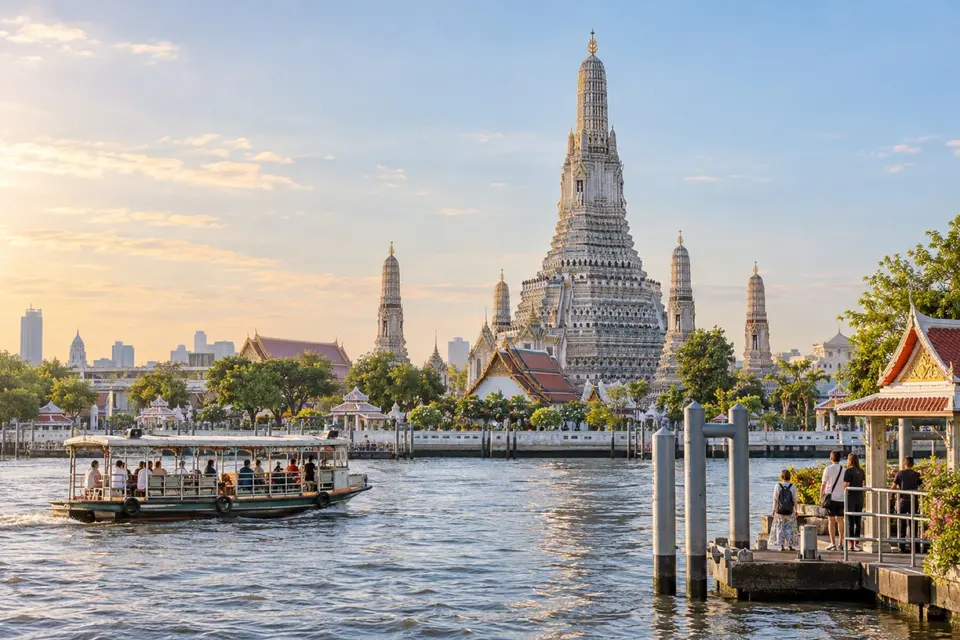
Begin with the Grand Palace area, Wat Pho, and a Chao Phraya river crossing to Wat Arun. These sights form one logical cluster; visiting them together saves hours in traffic.
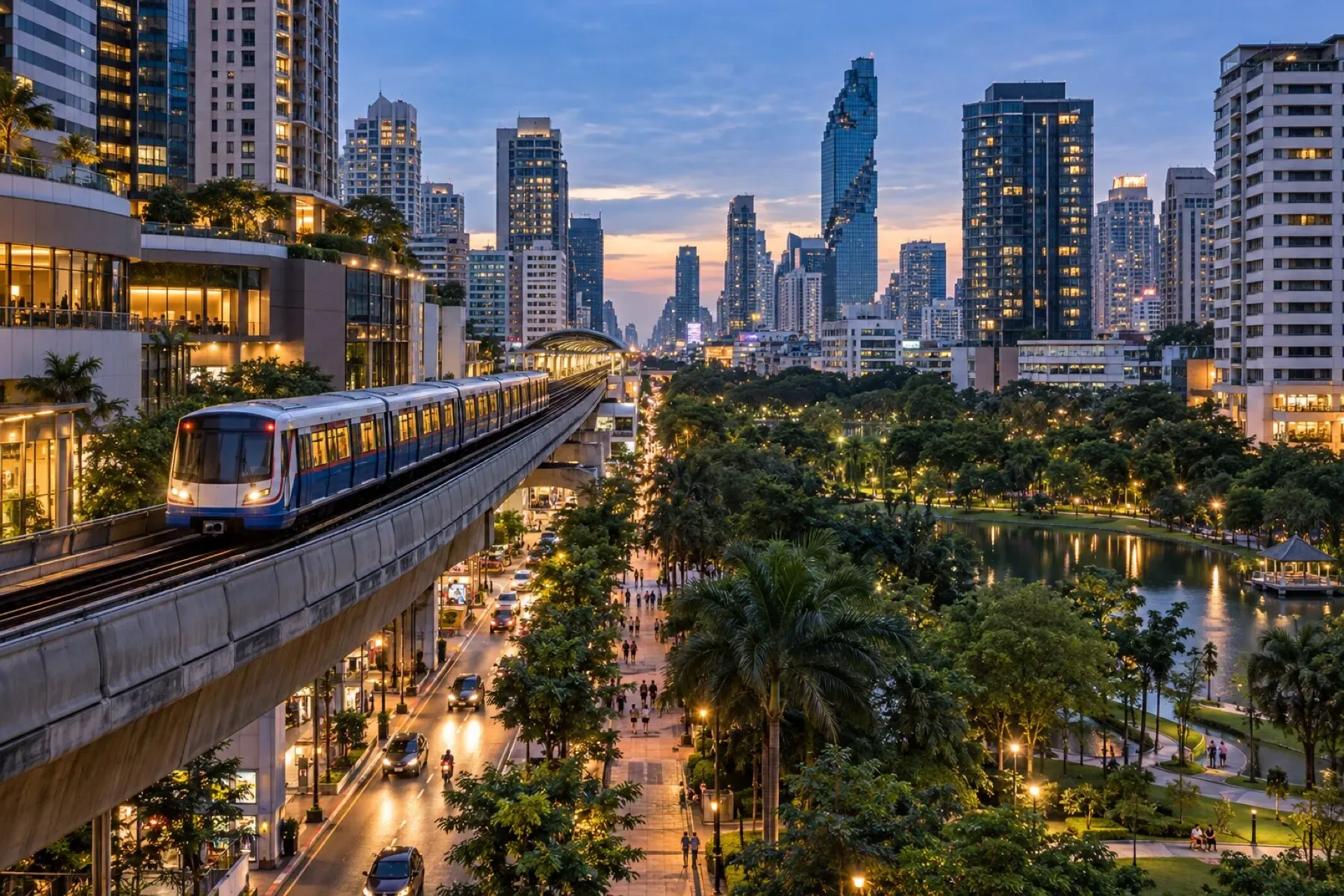
Reserve another day for modern Bangkok: use the BTS to connect Siam, the Bangkok Art and Culture Centre, Lumphini or Benjakitti Park, and an evening food area.
- Grand Palace and Wat Phra Kaew
- Wat Pho and the riverside
- Wat Arun near sunset
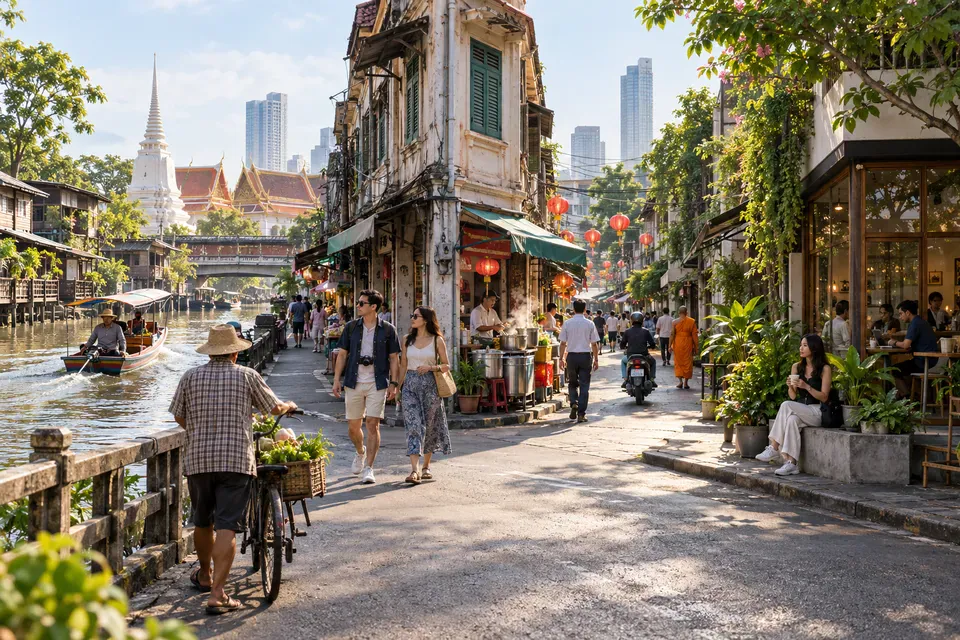
- Chinatown after dark
- A canal or river journey
- One neighborhood explored slowly
Build days by geography
Bangkok is too large for a checklist planned only by popularity. Group the Old City and riverside together, Chinatown with Talat Noi, and Siam with Sukhumvit or the central parks.
Allow slack for heat, rain, queues, and traffic. Two major sights plus a food neighborhood often makes a better day than five disconnected stops.
Go beyond the landmarks
Add a local market, museum, creative district, live performance, cooking class, Muay Thai event, or green space according to your interests. Bangkok rewards repeat visits because its neighborhoods change block by block.
Choose experiences by the time they need
Royal sites and active temples deserve an early start, appropriate clothing, and enough time to enter without rushing. Markets depend on their operating day and strongest trading period. Parks work best before the heat builds or toward evening, while Chinatown becomes a different experience after dark.
Use one anchor experience for each half-day, then add a nearby meal, walk, or smaller museum. This creates room for weather and transport changes without turning the day into a sequence of late arrivals.
- Morning: temples, markets, and outdoor heritage
- Midday: museums, malls, galleries, and lunch
- Late afternoon: parks, river trips, and neighborhood walks
- Evening: food districts, performances, and nightlife
Build a useful bad-weather alternative
Keep an indoor option in the same part of the city rather than crossing Bangkok when rain begins. A museum, covered market, mall, cooking activity, or long meal can preserve the day until conditions improve.
Heavy rain can slow roads and affect exposed walkways or piers. Recheck the return route before committing to a distant evening reservation.
Plan the next step from Things to Do in Bangkok
Bangkok works best when places in the same district share a day. Use these guides to connect this topic with transport, food, timing, and nearby experiences:
Bangkok temples and the Grand Palace
Build this topic into a more coherent Bangkok day.
Bangkok neighborhoods
Compare the district, atmosphere, and access before choosing a base.
Bangkok with kids
Build this topic into a more coherent Bangkok day.
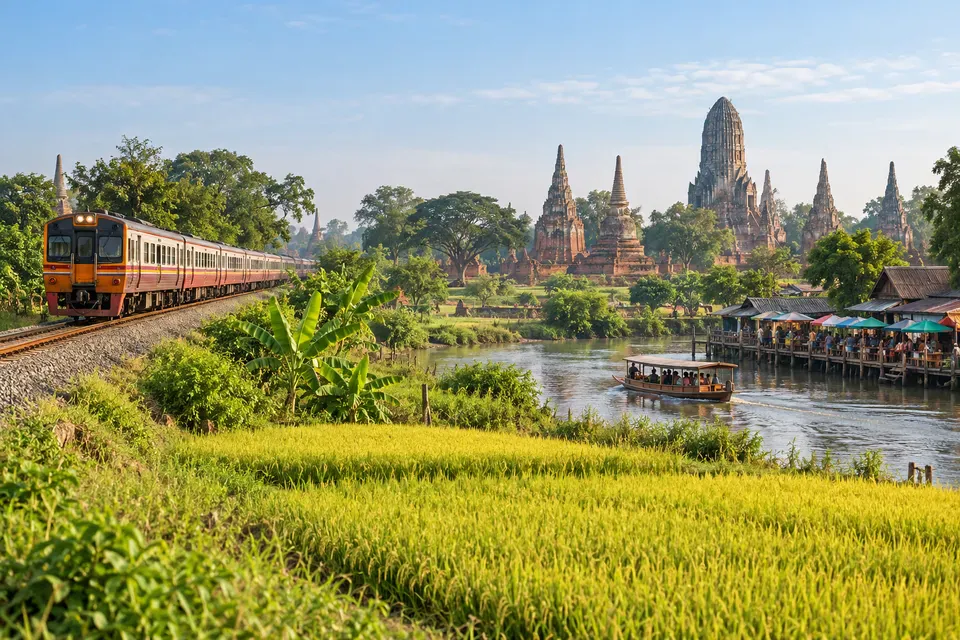
Day trips from Bangkok
Build this topic into a more coherent Bangkok day.
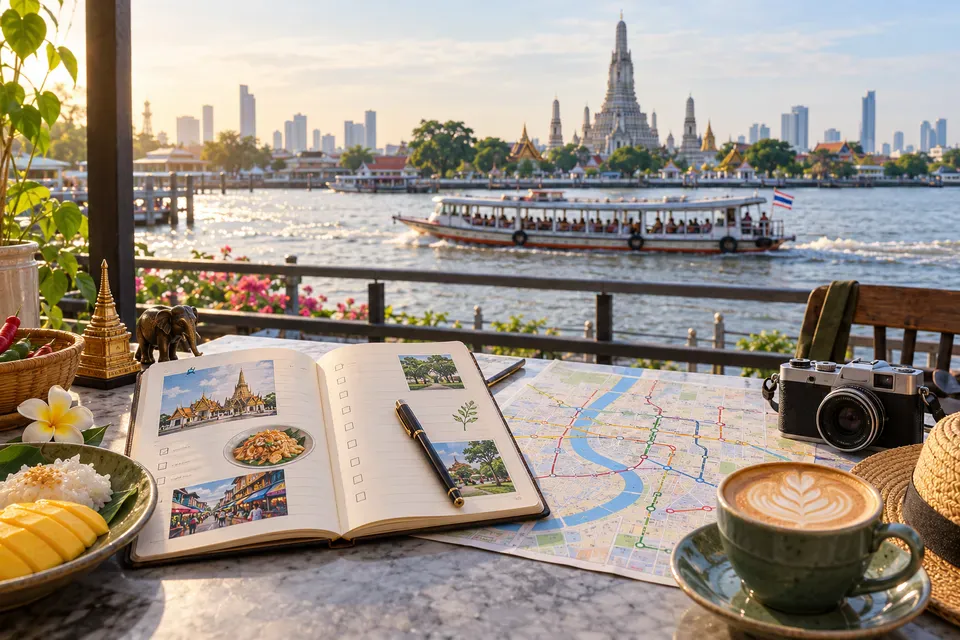
Bangkok itineraries
Build this topic into a more coherent Bangkok day.