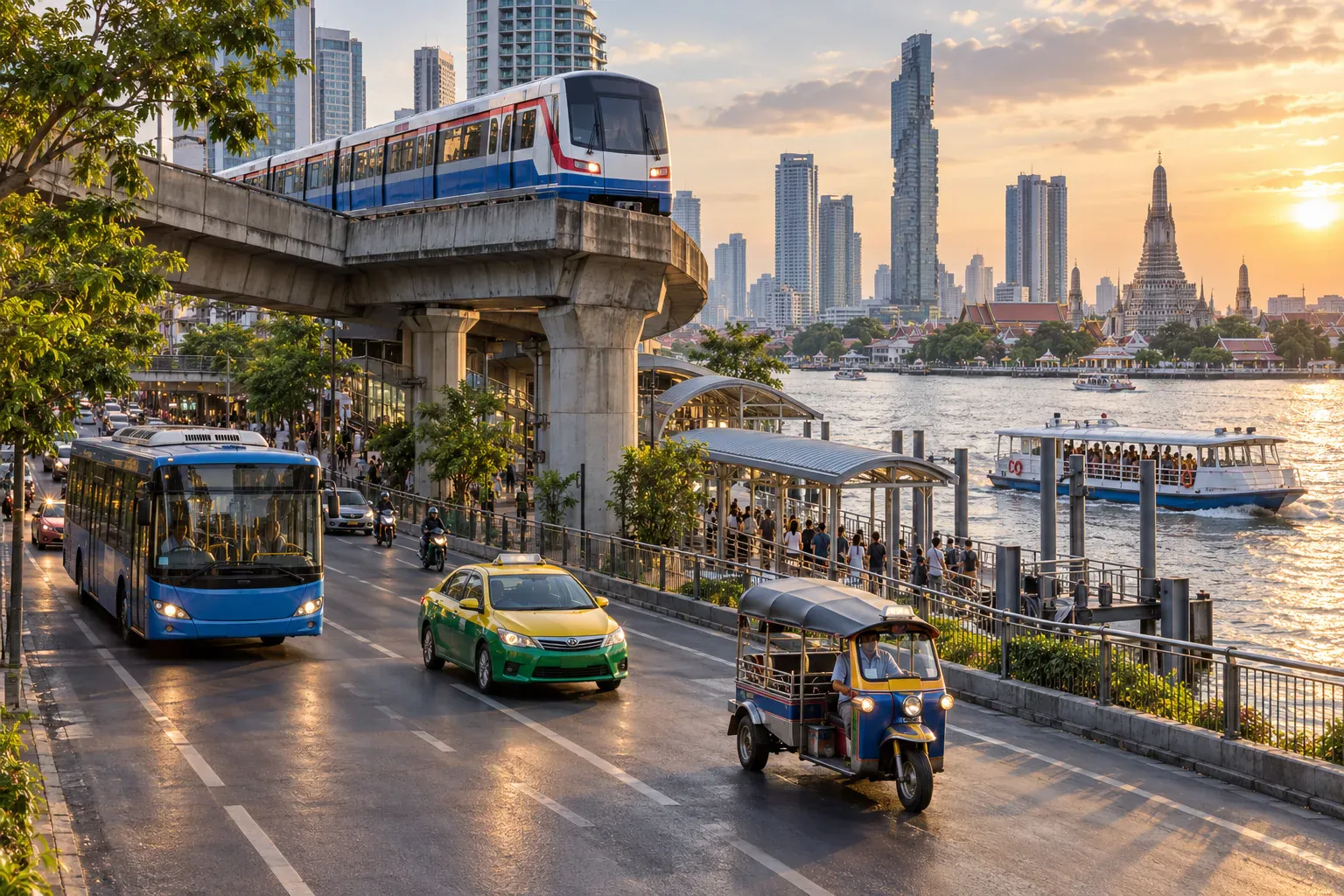
Getting Around Bangkok
Use Bangkok’s BTS, MRT, river boats, buses, taxis, and walking links as one network while avoiding predictable traffic traps.
Getting Around Bangkok at a glance
Fastest core travel
- BTS and MRT
Best scenic route
- Chao Phraya boats
Airport rail
- Suvarnabhumi link
Peak congestion
- Weekday commutes
Use rail as the backbone
The BTS Skytrain and MRT cover many central districts and interchange with airport and suburban rail. Contactless payment rules vary by system, so do not assume one card works everywhere.
Stay near a station if your itinerary spans several districts. In the Old City and some riverside areas, combine rail with boats, short taxi rides, or walking.
Boats, taxis, and tuk-tuks
River boats can bypass road congestion and connect piers near major sights. Confirm the boat service and direction before boarding because tourist boats, express boats, and local ferries operate differently.
For taxis, insist on the meter where required or use a reputable ride-hailing app with the plate verified. Agree on a tuk-tuk fare before departure and treat it as a short local ride, not the default transport mode.
- Screenshot the destination in Thai
- Allow extra time during rain
- Check the final train time
- Use marked crossings and footbridges
- Never accept an unsolicited multi-stop shopping tour
Plan around traffic
Road travel can slow dramatically during commute periods and heavy rain. Do not schedule an airport journey or timed attraction using an optimistic off-peak estimate.
Plan the last kilometer
Rail usually solves the longest part of a central journey, but the station exit and final walk determine whether the route is practical. Large junctions, elevated walkways, canal crossings, and station complexes can make the last kilometer slower than expected.
Save the correct exit number, the destination in Thai, and a map pin before leaving the station. When mobility or luggage is a concern, compare a short taxi from a better station with a longer exposed walk.
Choose transport by situation
Use rail for predictable cross-city movement, river boats for suitable waterfront routes, and taxis for direct trips that avoid the worst congestion period. Buses provide broad coverage but require more route confidence and time.
Walking works best inside one neighborhood. Bangkok is not designed for treating every pair of nearby-looking map pins as a comfortable pedestrian connection.
- Rail for central corridors
- Boats for river destinations
- Taxi or app ride for awkward final connections
- Walking for compact neighborhood exploration
- Extra buffer for rain and commute periods
Plan the next step from Getting Around Bangkok
Bangkok works best when places in the same district share a day. Use these guides to connect this topic with transport, food, timing, and nearby experiences:
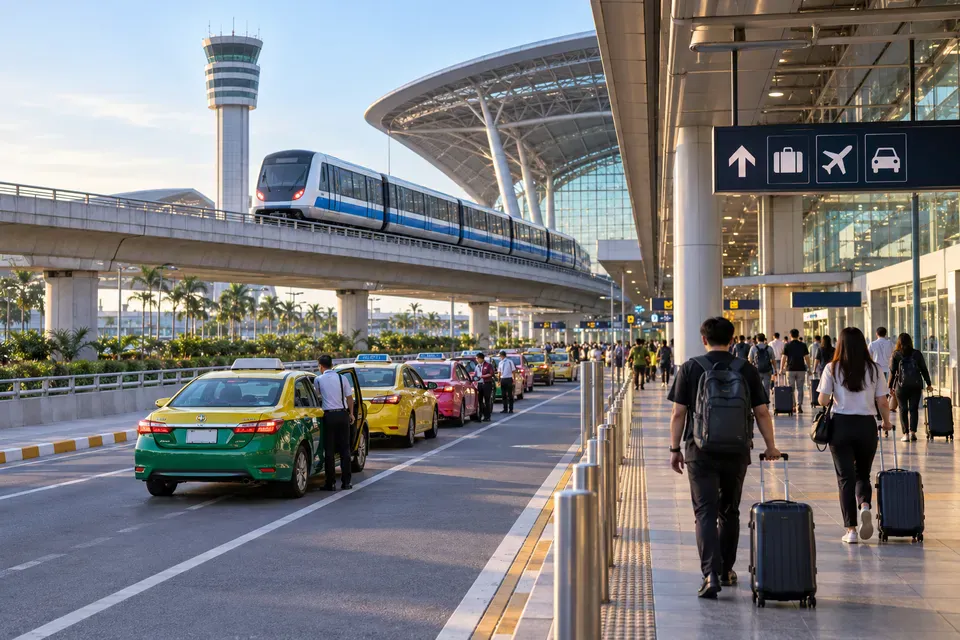
Bangkok airport transfers
Connect the route to realistic Bangkok travel time and arrival choices.
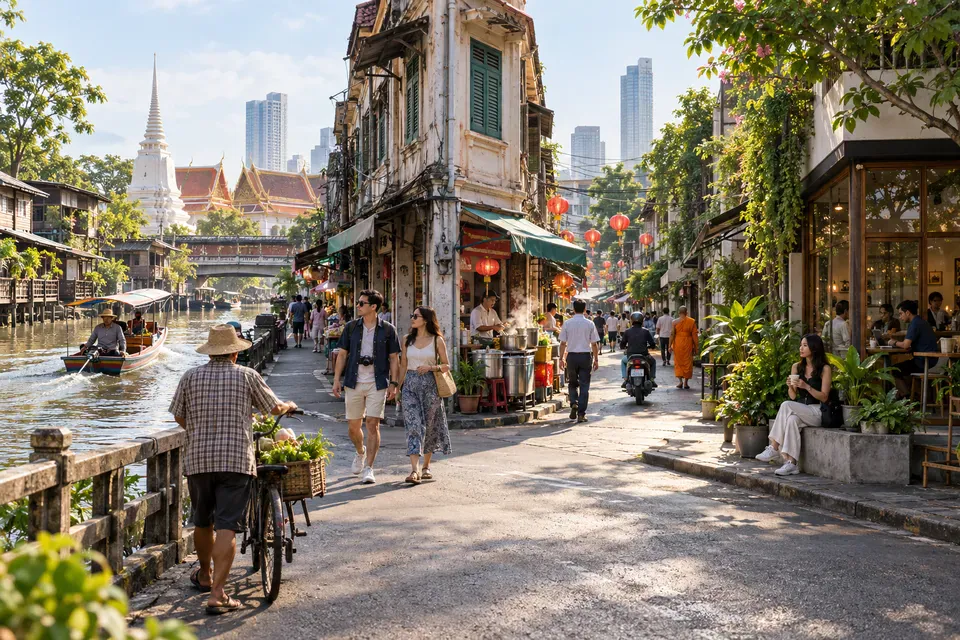
Bangkok neighborhoods
Compare the district, atmosphere, and access before choosing a base.

Phuket to Bangkok
Build this topic into a more coherent Bangkok day.