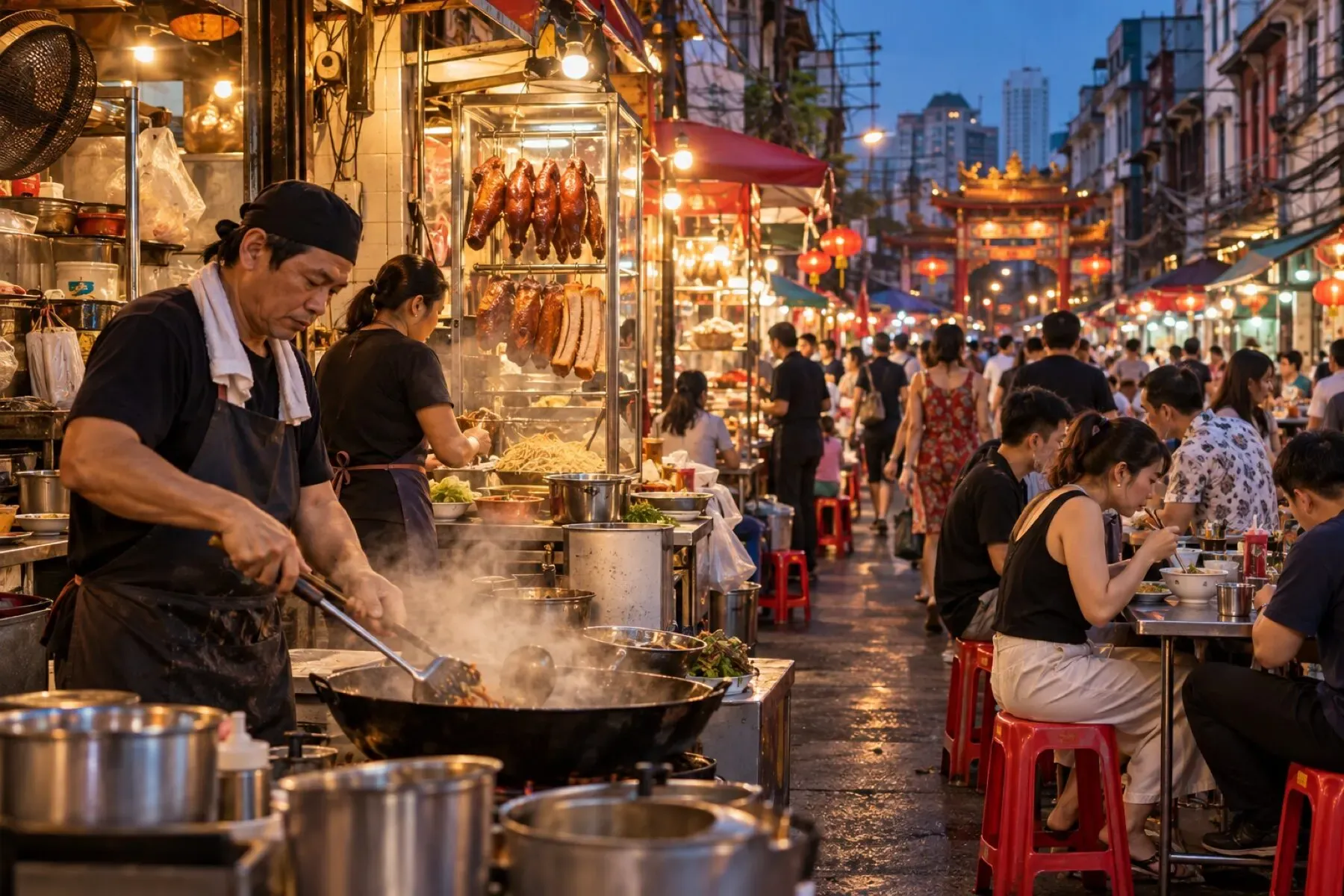
Bangkok Food and Street Food
Understand Bangkok’s food neighborhoods, market meals, regional Thai cooking, restaurant etiquette, ordering, and hygiene cues.
Bangkok Food and Street Food at a glance
Best strategy
- Eat by neighborhood
Street-food hours
- Often late afternoon onward
Cash
- Useful for small stalls
Must explore
- Chinatown and old districts
Eat by district
Yaowarat and nearby Chinatown lanes are famous for evening food, but Bangkok’s range extends through Bang Rak, Nang Loeng, Wang Lang, Ari, Thonburi, and neighborhood markets across the city.
Use busy specialist vendors as a quality signal: short menus, steady ingredient turnover, visible cooking, and local repeat customers are often more useful than viral queues.
What to look for
Bangkok brings together central Thai staples and food from every region of the country. Seek boat noodles, roast duck and pork, curry rice, grilled seafood, som tam, Chinese-Thai dishes, sweets, fruit, and modern interpretations instead of one supposed definitive dish.
- Ask about spice rather than assuming
- Confirm prices before ordering seafood by weight
- Choose freshly cooked hot food
- Carry small notes and tissues
- Avoid blocking a vendor’s working space
Dietary and allergy communication
Learn or save a Thai explanation of serious allergies. “Vegetarian” can still include fish sauce, oyster sauce, shrimp paste, or stock, so ask about the specific ingredient that matters.
Match a neighborhood to the meal
Yaowarat works for a busy evening of Chinese-Thai specialties and shared dishes. Bang Rak connects long-running shops with the river. Nang Loeng and older market areas are better earlier in the day, while Ari and parts of Sukhumvit mix Thai food with contemporary cafés and restaurants.
Do not travel across the city for every famous stall. Choose one food district, arrive when its vendors operate, and let a few good meals replace a checklist of distant recommendations.
Order with fewer surprises
Ask the price before ordering items sold by weight, confirm whether rice or sides are separate, and point to the exact portion when language is difficult. Carrying a translated allergy statement is safer than relying on a broad dietary label.
Busy stalls can be fast and direct. Decide before reaching the front, keep payment ready, and move away from the working area after collecting the food.
- Save critical allergy wording in Thai
- Ask whether a dish contains fish sauce or shrimp paste
- Choose food cooked hot to order
- Use small notes for simple stalls
Plan the next step from Bangkok Food and Street Food
Bangkok works best when places in the same district share a day. Use these guides to connect this topic with transport, food, timing, and nearby experiences:
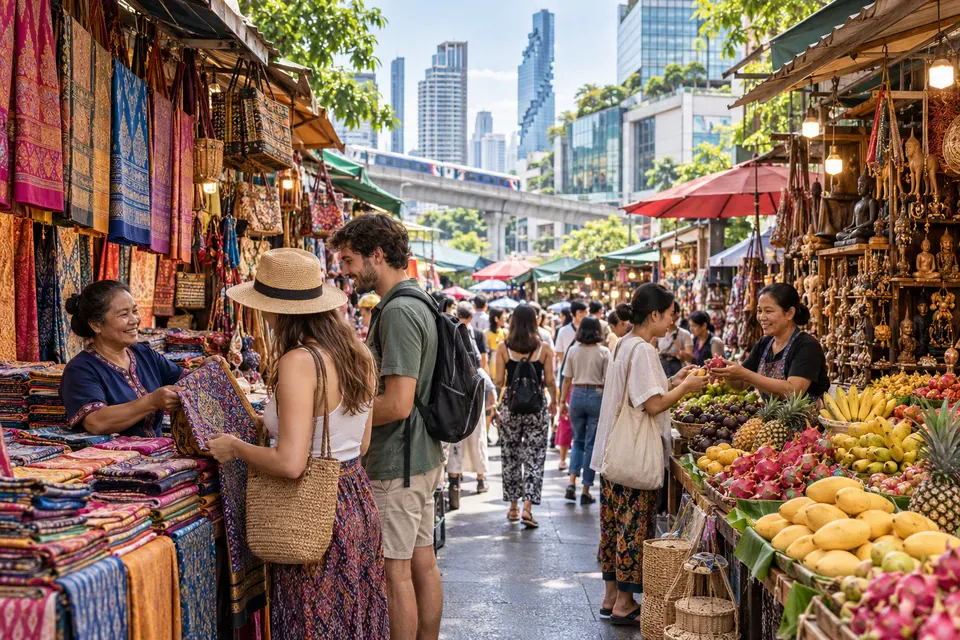
Bangkok markets and shopping
Add a food or market stop that fits the same part of the city.
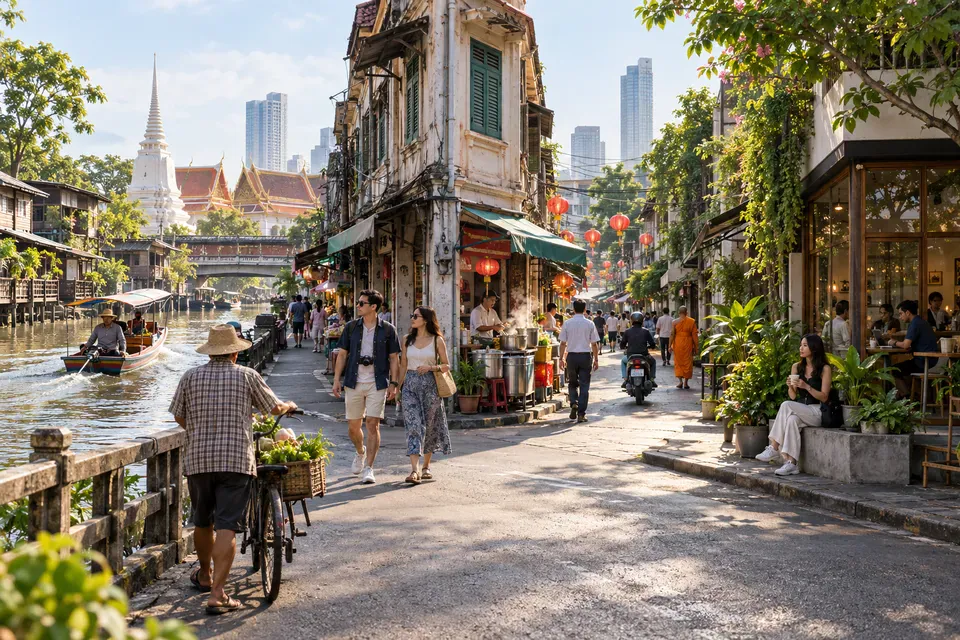
Bangkok neighborhoods
Compare the district, atmosphere, and access before choosing a base.
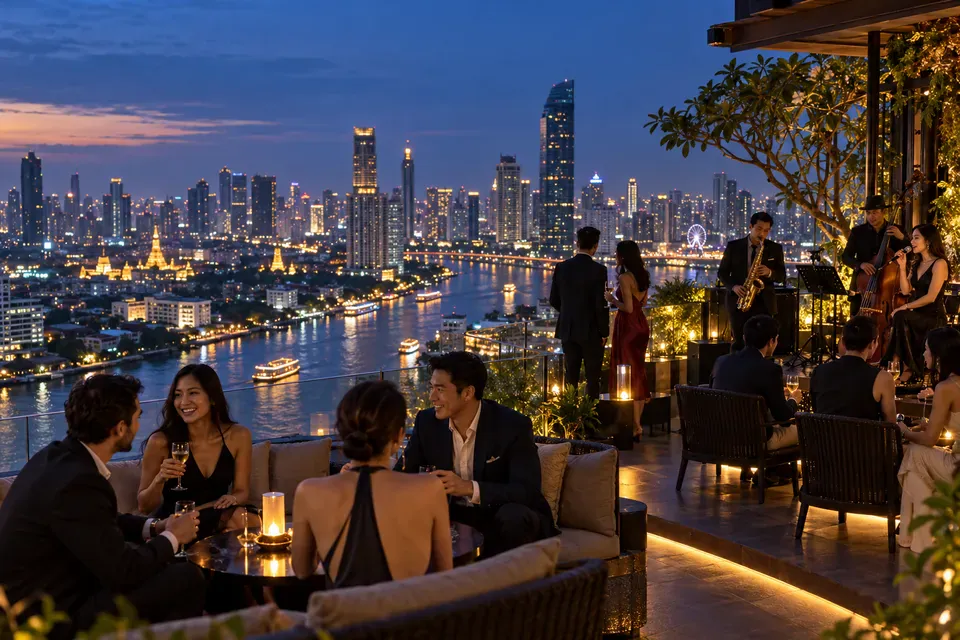
Bangkok nightlife
Build this topic into a more coherent Bangkok day.