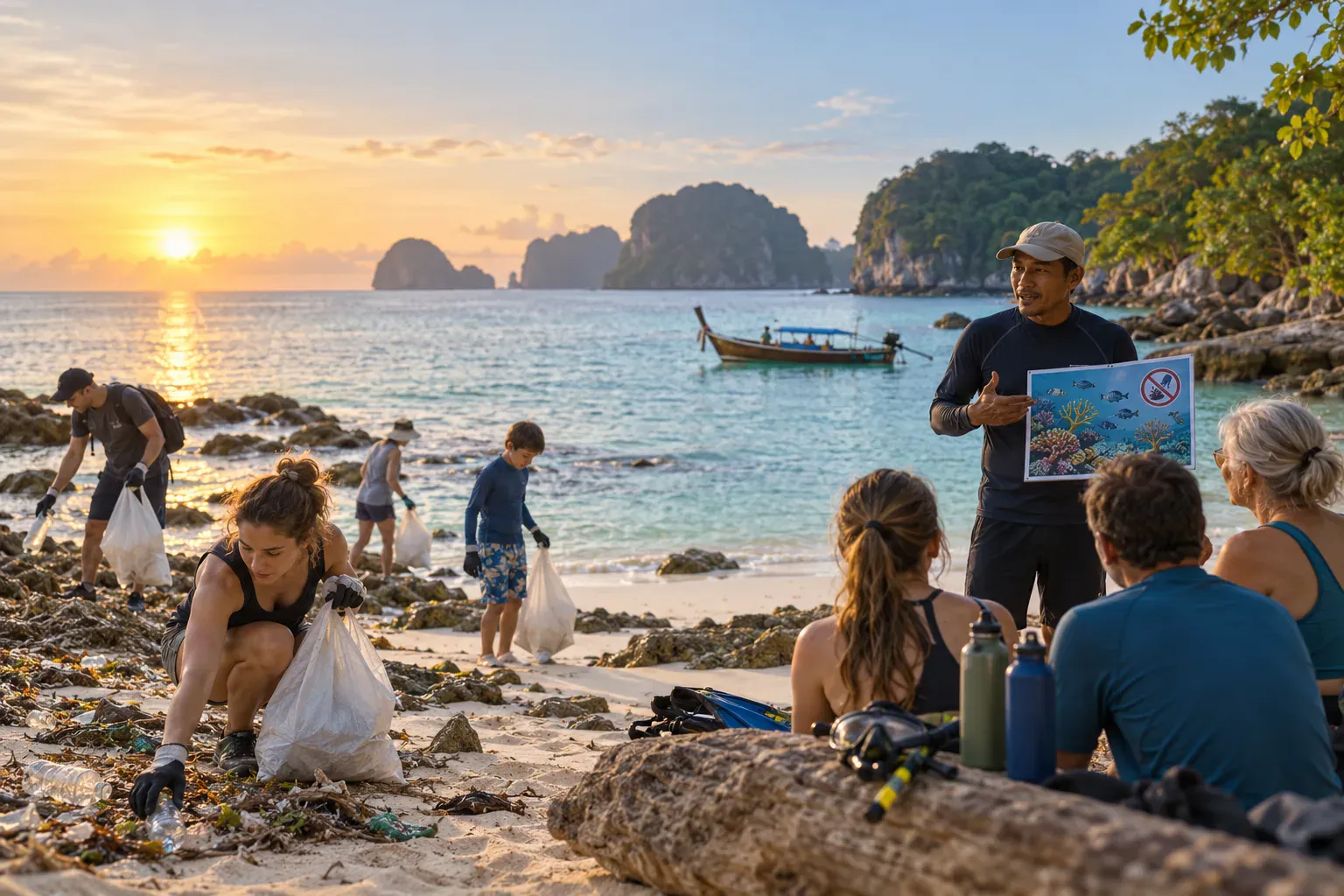
Responsible Phuket Travel
Small choices around wildlife, reefs, waste, water, transport, and local spending make a measurable difference on an island under visitor pressure.
Responsible Phuket Travel at a glance
Wildlife
- Observe; never handle or ride
Reefs
- Do not touch, feed, or stand
Waste
- Refill and refuse single-use items
Local value
- Use community businesses
Choose ethical experiences
Avoid elephant riding, animal performances, photo props, captive-animal handling, and marine-life feeding. Responsible observation keeps distance and does not force behavior for a photograph.
Ask boat and dive operators how they manage anchors, waste, group size, wildlife distance, and reef contact.
Reduce island pressure
Carry a refillable bottle where safe refill is available, decline unnecessary plastic, conserve hotel water and electricity, and dispose of waste securely. Reef-safe behavior matters more than marketing labels alone.
- Stay on marked paths
- Use public or shared transport when practical
- Dress respectfully at sacred sites
- Ask before photographing people
- Buy genuinely local crafts and food
Support Phuket communities
Spread spending beyond international chains: local restaurants, guides, markets, family-run accommodation, artists, and community projects retain more value on the island. Fair prices and respectful bargaining support livelihoods.
Look beyond environmental labels
Responsible travel also includes road safety, fair working conditions, neighborhood noise, religious respect, and honest photography. Ask specific questions instead of relying on an “eco” label. A smaller group, realistic itinerary, transparent animal policy, and locally knowledgeable guide are more meaningful signals than vague sustainability language.
Plan the next step from Responsible Phuket Travel
A good plan connects timing, transport, costs, and the right area to stay. Continue with the guides that affect this decision most:

Diving and snorkeling
Add a well-matched activity without stretching the day across the island.
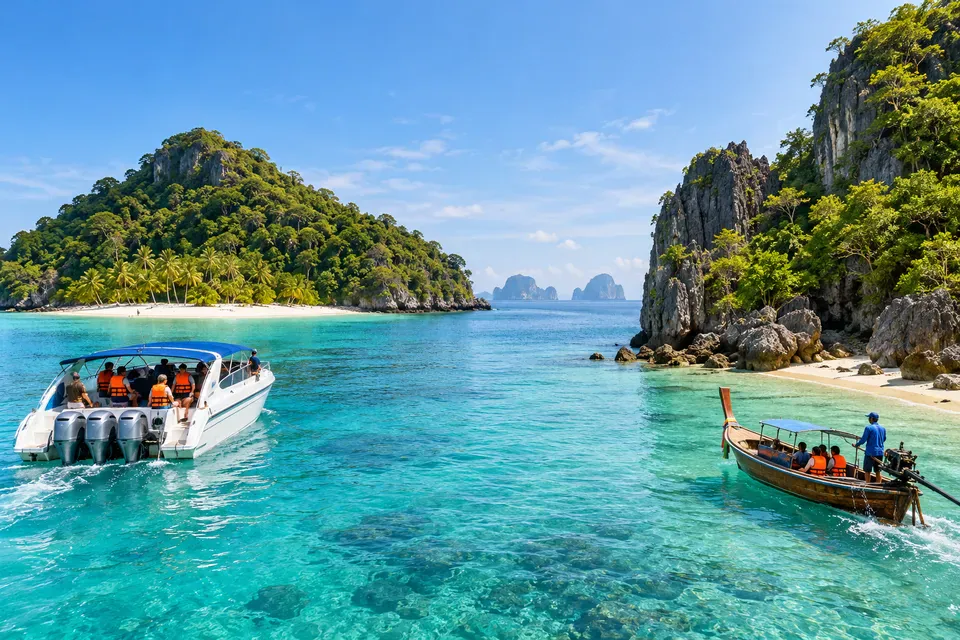
Island hopping
Add a well-matched activity without stretching the day across the island.
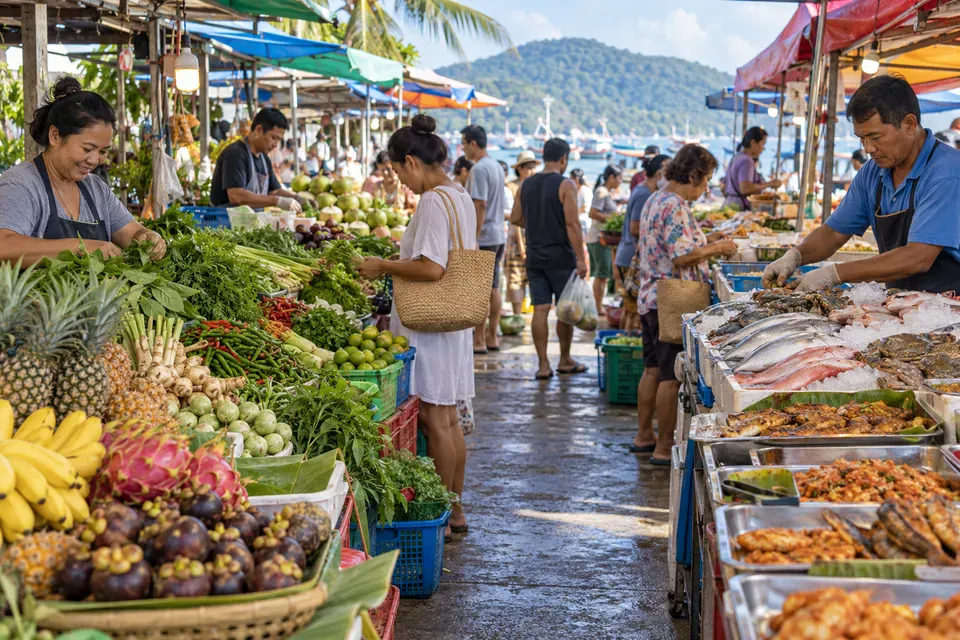
Markets
Continue with a closely related Phuket guide.
Continue planning your Phuket trip
Connect this advice with arrival, transport, timing, accommodation, costs, entry planning, and responsible travel in the Phuket trip-planning hub.