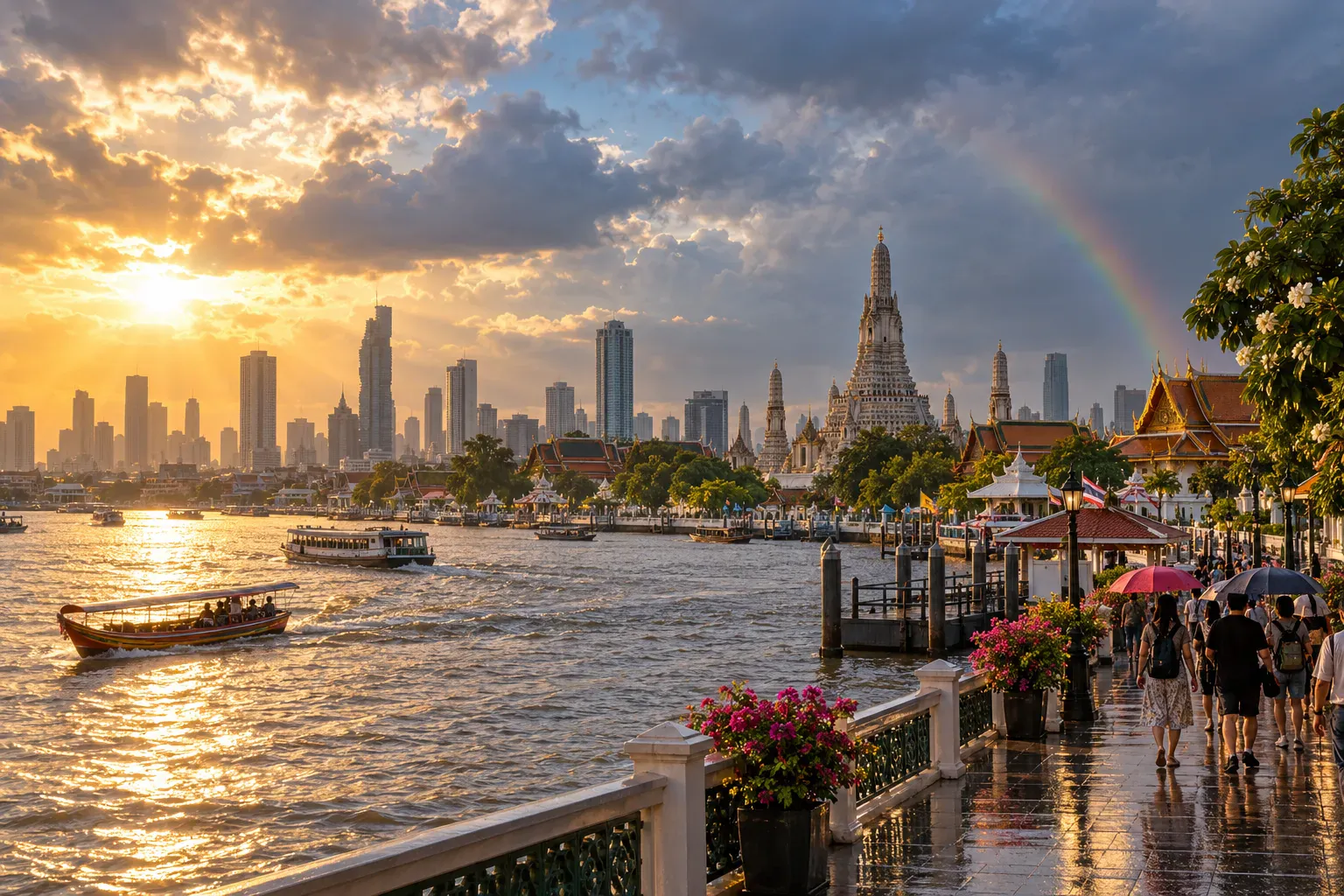
Bangkok Weather and Best Time to Visit
Plan for Bangkok’s heat, humidity, monsoon downpours, air quality, crowds, and holiday periods throughout the year.
Bangkok Weather and Best Time to Visit at a glance
Cooler period
- Roughly Nov–Feb
Hottest period
- Often Mar–May
Wettest tendency
- Late monsoon
Always expect
- Heat and humidity
Think in trade-offs
The relatively cooler dry-season months are popular because walking is easier, but accommodation demand and visitor numbers rise. Hot-season travel can be intense outdoors, while the wet season brings humidity and heavy showers rather than guaranteed all-day rain.
Daily conditions matter more than a historical average. Check a short-range forecast, flood or storm advisories, and air-quality information close to travel.
Adapt the day
Start temples and markets early, schedule indoor attractions during the hottest hours, and keep a flexible late-afternoon option during rainy periods. Waterproofing a phone and carrying quick-dry footwear can matter more than a heavy raincoat.
- Hydrate before feeling thirsty
- Use shade and sun protection
- Never walk through moving floodwater
- Allow longer road journeys in heavy rain
- Move strenuous activity indoors during poor air quality
Festivals and closures
Songkran, Lunar New Year activity, royal events, and public holidays can reshape traffic, opening hours, hotel demand, and neighborhood atmosphere. Verify dates and operating details for the year of travel.
Plan for heat every month
Even during the relatively cooler season, midday walking can be demanding. Prioritize outdoor heritage sites in the morning, use shaded transport links, and schedule a longer indoor break before returning outside later.
Humidity can affect sleep, hydration, walking pace, and camera equipment. Choose breathable clothing, drink regularly, and let the forecast change the order of the day.
Rain, flooding, and air quality
A tropical downpour may pass quickly or disrupt roads for much longer. Do not walk through moving floodwater, and allow extra time for airport or dinner journeys when heavy rain develops.
Seasonal air quality can also change outdoor plans. Check a current official or reputable local reading when haze is visible or when a traveler has respiratory concerns.
- Keep electronics in a dry pouch
- Wear footwear that can handle wet surfaces
- Use indoor alternatives near the planned district
- Follow medical advice for air-quality sensitivity
Plan the next step from Bangkok Weather and Best Time to Visit
Bangkok works best when places in the same district share a day. Use these guides to connect this topic with transport, food, timing, and nearby experiences:
Bangkok itineraries
Build this topic into a more coherent Bangkok day.
Bangkok safety
Check the practical details before committing time or money.
Where to stay in Bangkok
Compare the district, atmosphere, and access before choosing a base.